Mountaintop Discovery Gardens
A student-led plan for a native-plant, food and learning garden on Lehigh University’s Mountaintop Campus, where students, staff and visiting classes could learn outdoors and grow food.
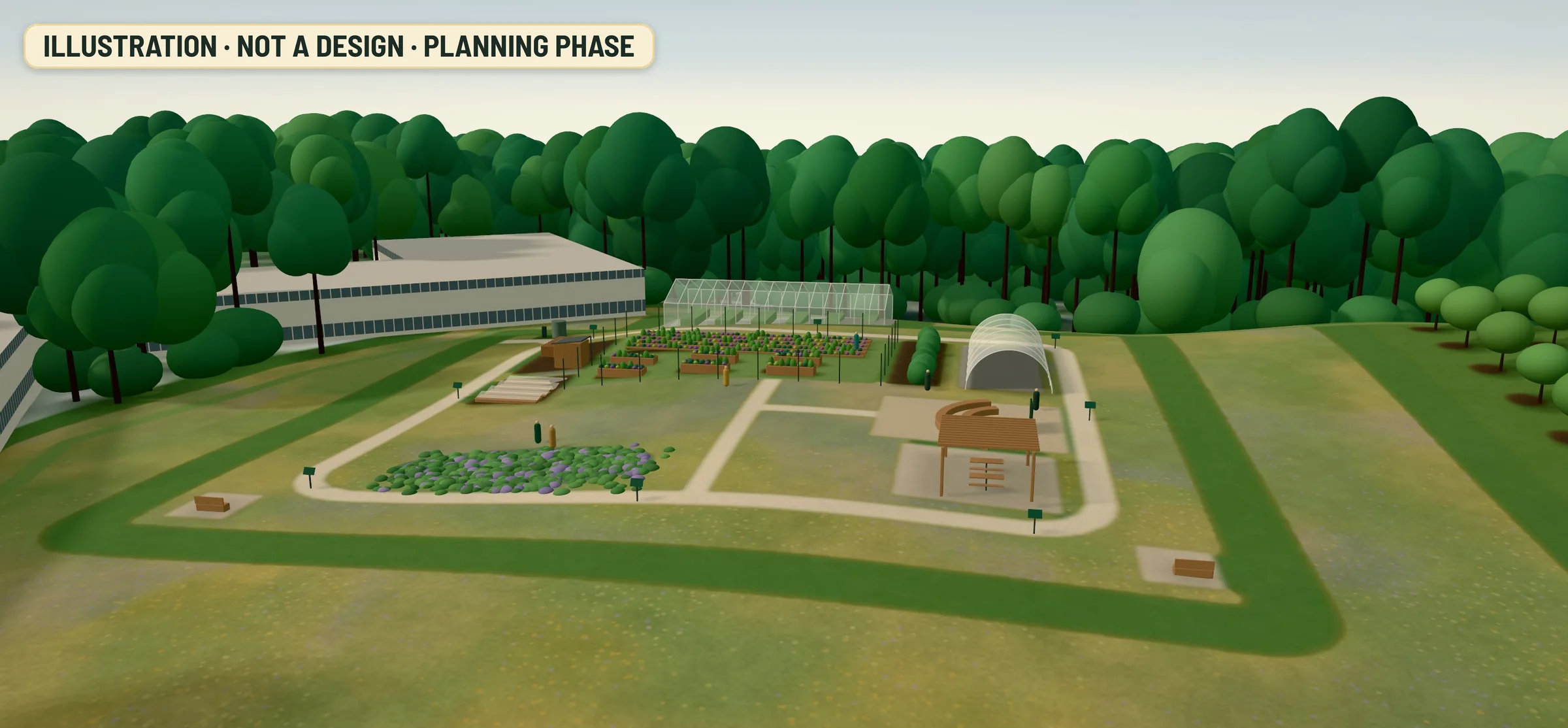
Credits: USGS, USDA NAIP, © OpenStreetMap contributors (ODbL), Microsoft, Overture Maps.
In short
Version 4, 20 October 2026, based on the plan PDF v3. Every location and size is preliminary and unverified.
What it is. A proposed accessible garden with a native pollinator meadow, edible demonstration beds, an outdoor classroom, a rain garden and compost. It would start as a pilot of 0.5 to 1 acre and could grow only if the pilot works, with site permission, soil and utility studies, funding and a year-round maintenance plan.
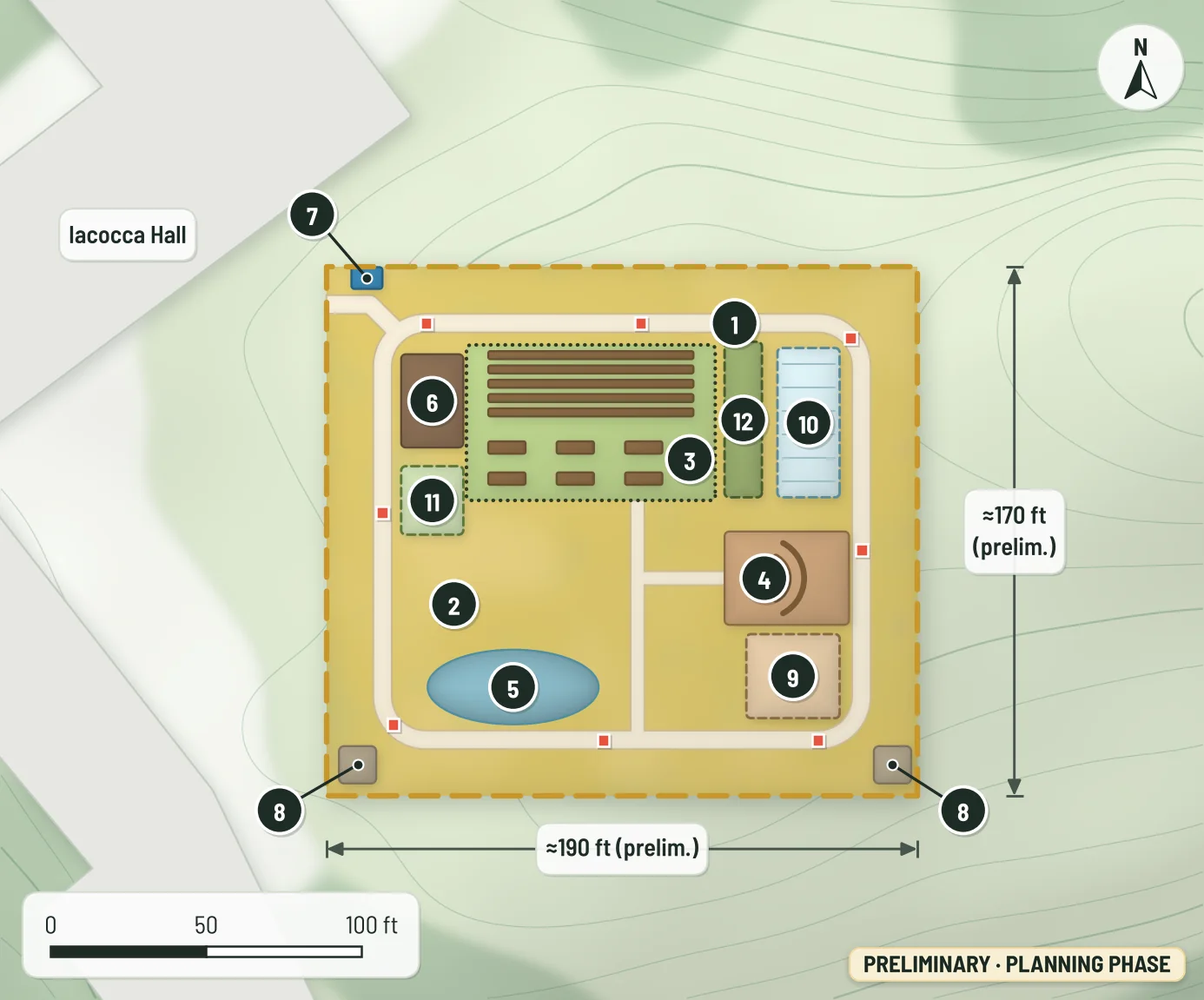
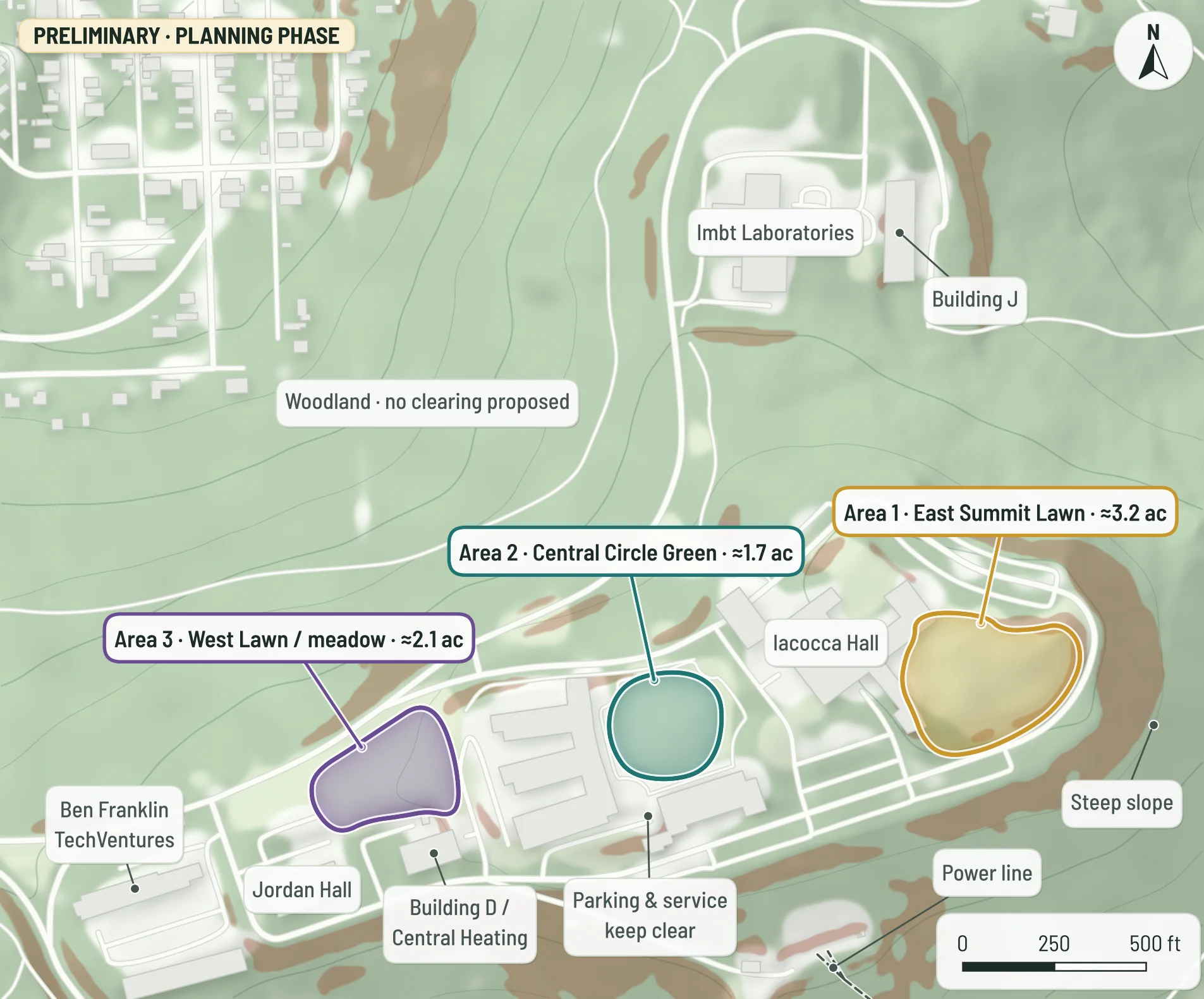
Where. Lehigh University's Mountaintop Campus. The pilot, about 0.74 acre, is illustrated on the East Summit Lawn beside Iacocca Hall. A desktop study found three possible study areas. None has been offered, and no tree removal is proposed.
Who it would help. Students, faculty, staff and visiting classes: a place to learn outdoors and grow food, with accessible paths and raised beds. It would also be habitat for pollinators and birds.
Status. Shared with university offices for feedback. No site permission, sponsor or funding; costs not yet estimated.
What it needs. The university's view and, in time, its written permission; a sponsor and a faculty advisor; soil tests before any food is grown; and year-round care.
Next step. Hear back from the university on whether a garden fits its plans and whether any study area could be considered.
Lehigh facts were checked only through search results. Sources: the plan PDF and the project website.
- Illustrated pilot
- ≈0.74 acreWithin a 0.5–1 acre pilot range, about 190 × 170 ft
- Possible study areas
- 3About 7 acres of open ground in total, in separate pieces
- Long-term possibility
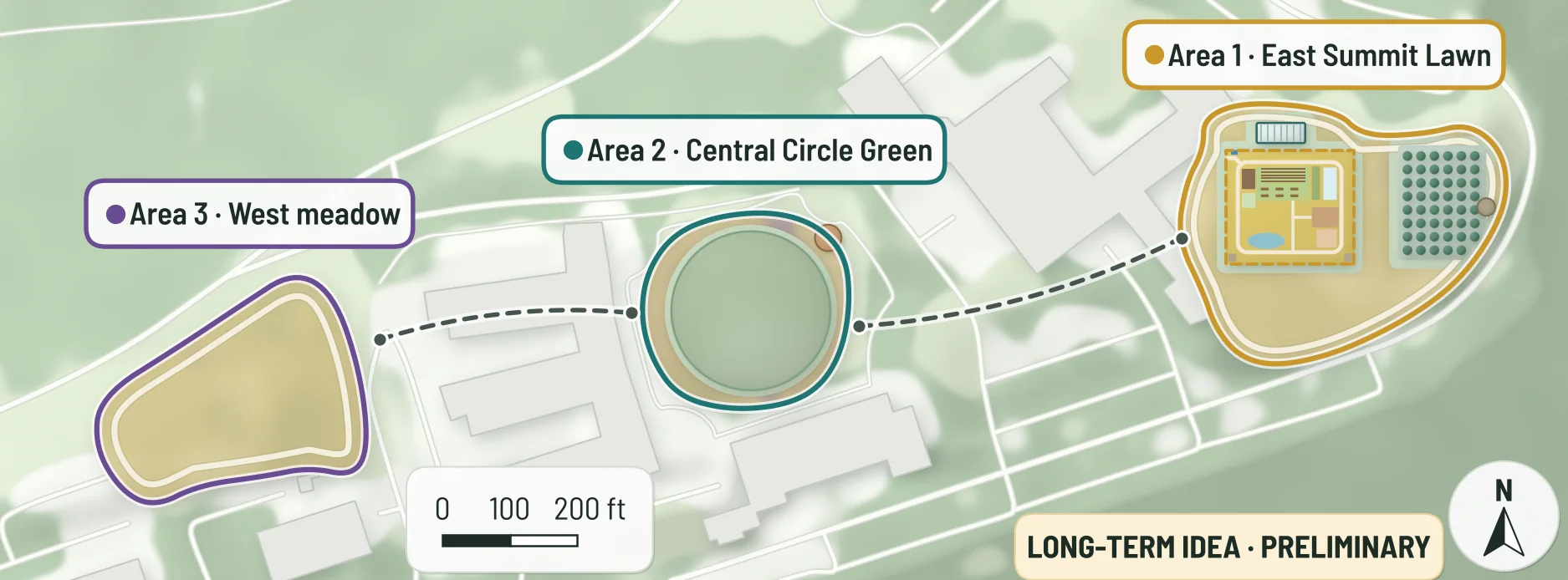
- ≈6 acresOnly with site permission, studies, funding and upkeep
The plan in pictures
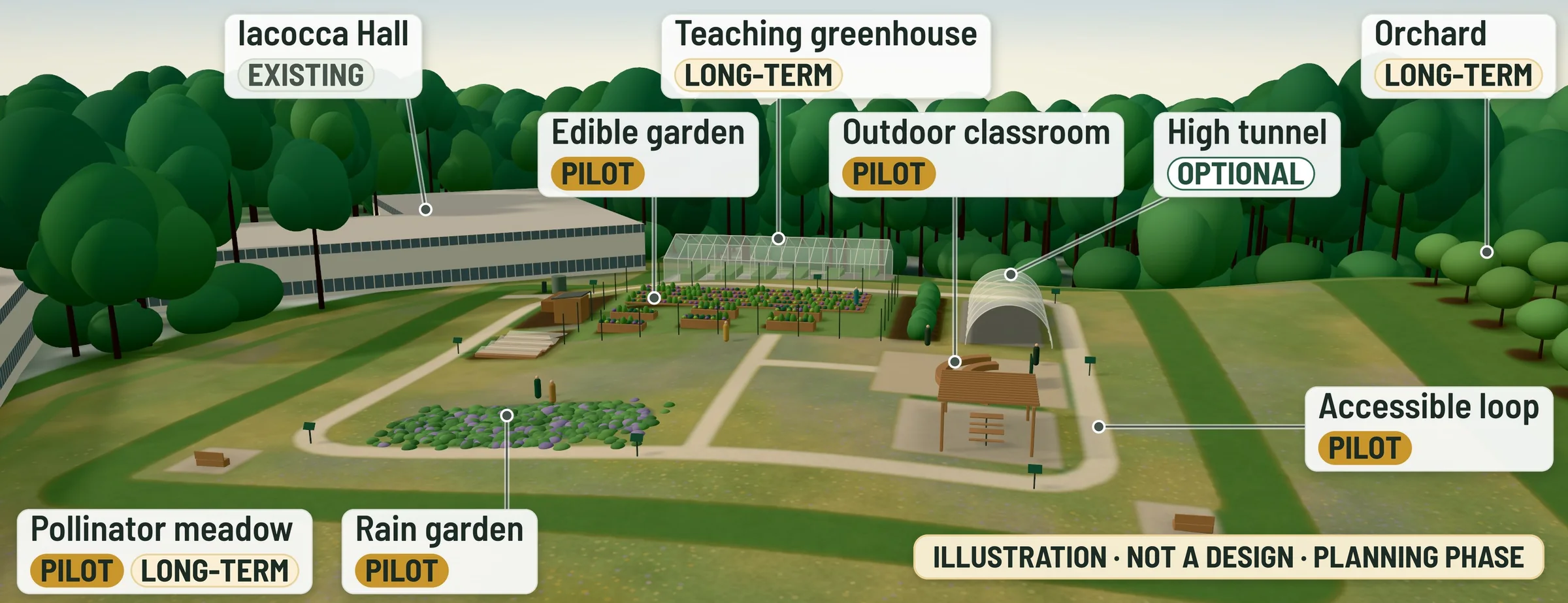
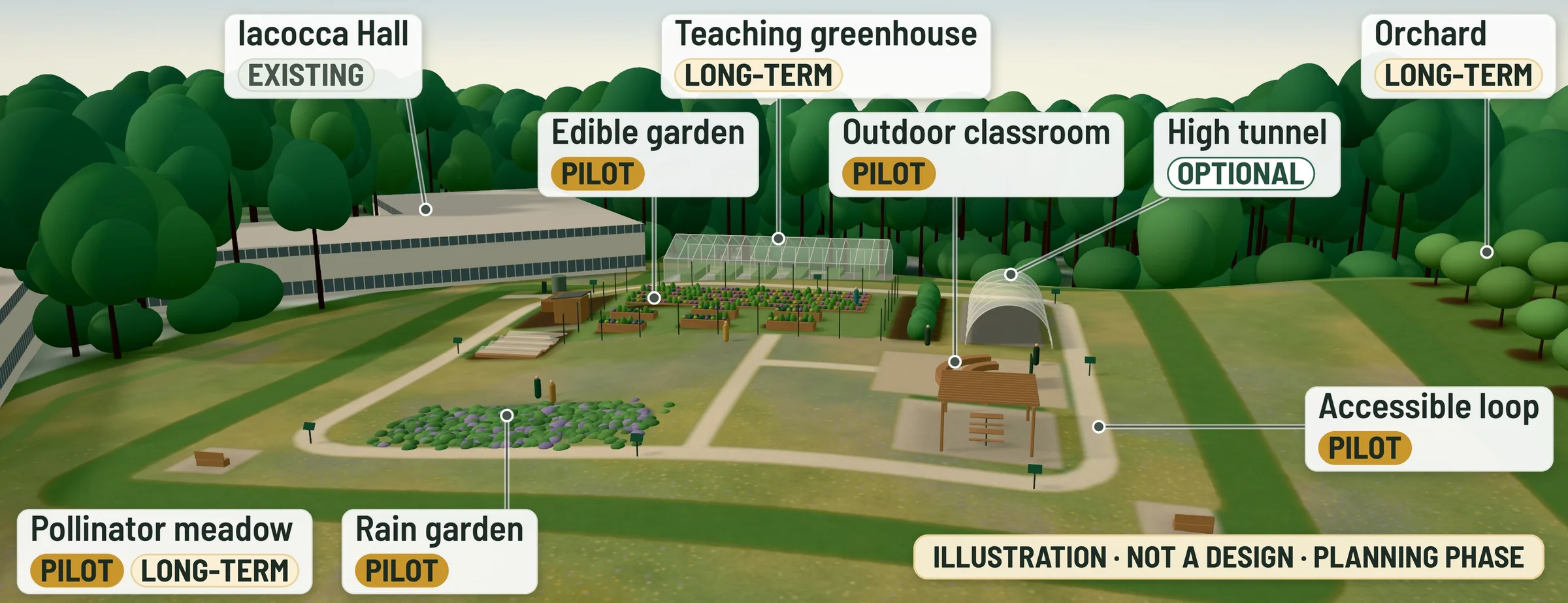
Illustrative view of the pilot garden, labeled
Illustration, not a design. Long-term items would depend on site permission, soil and utility studies, funding and upkeep.
Opens the full-size image (2400 × 923 pixels).
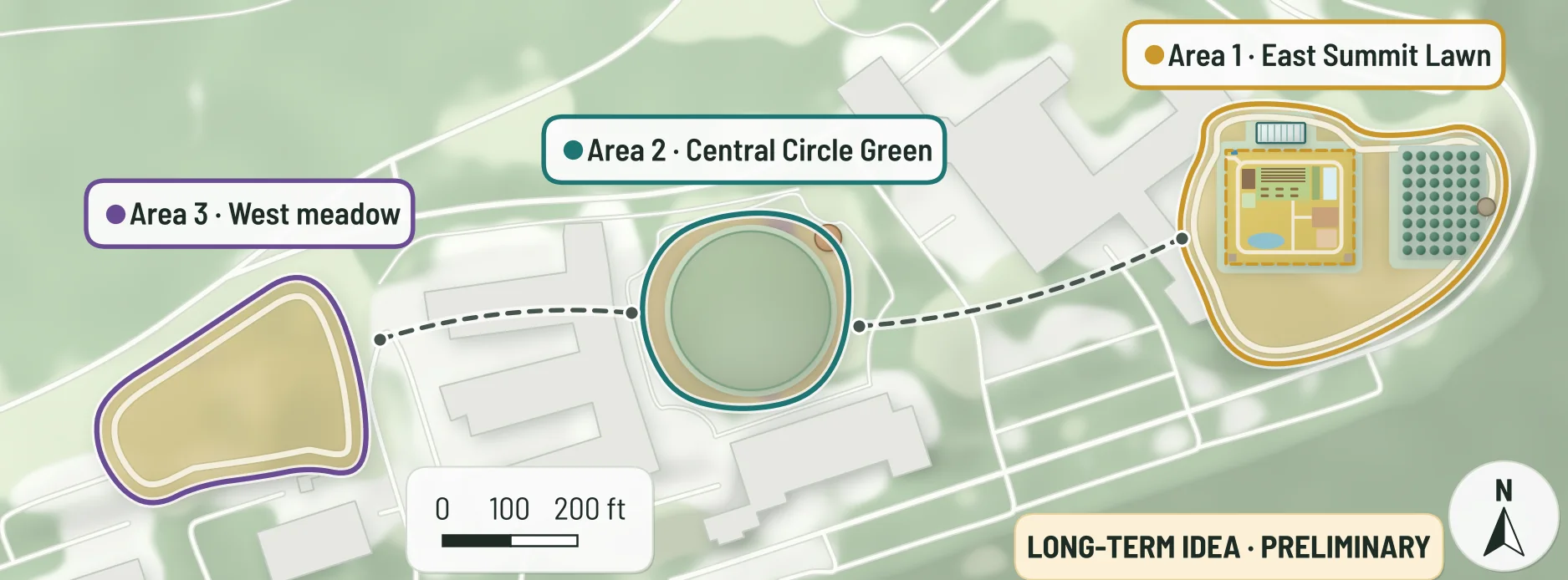
Long-term vision across three areas
Long-term idea. It would depend on site permission, soil and utility studies, funding and upkeep. Preliminary and unverified.
Opens the full-size image (1875 × 694 pixels).
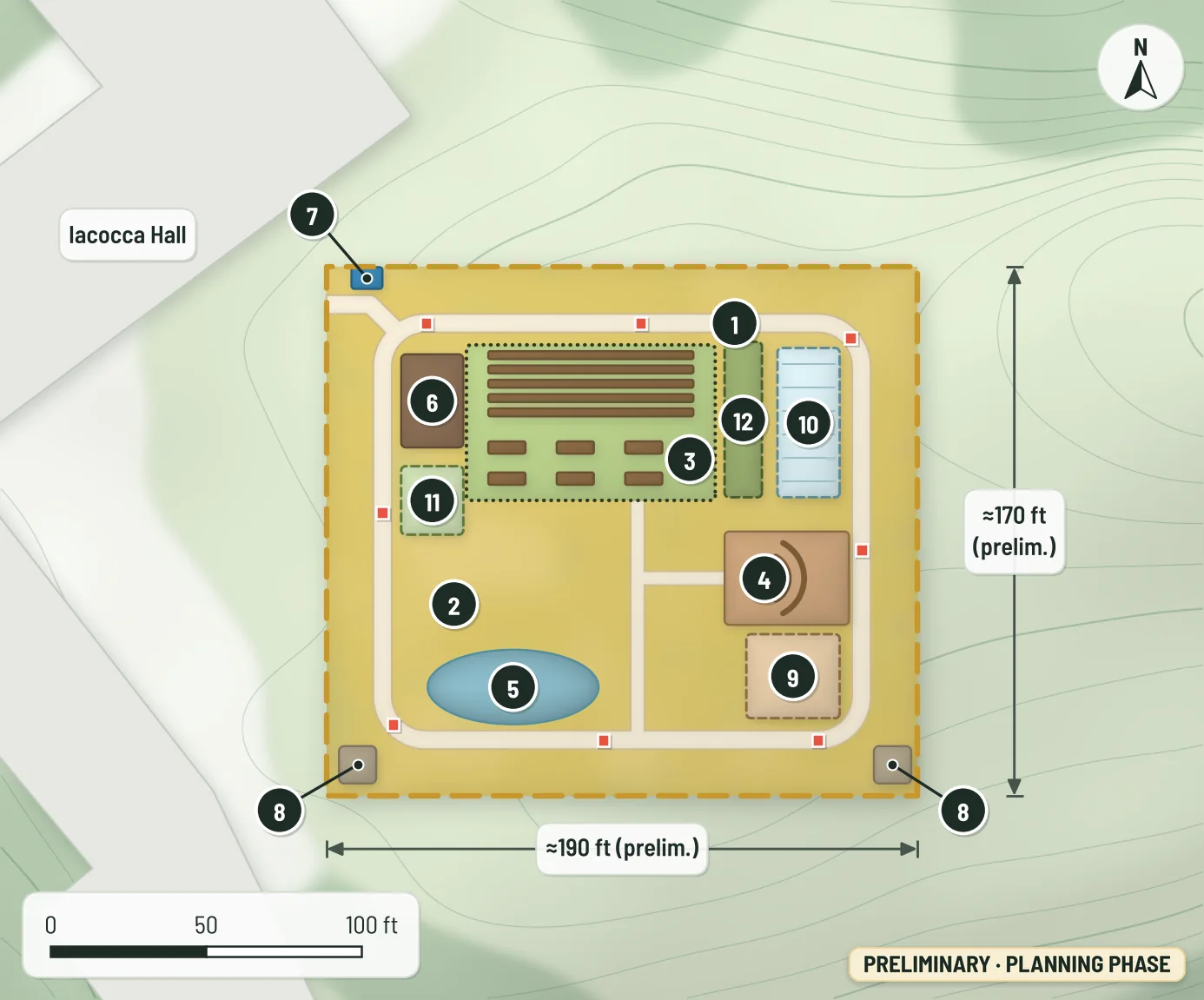
The pilot plan in its setting
Illustrative layout. Sizes and dimensions are preliminary and unverified.
Opens the full-size image (1386 × 1151 pixels).
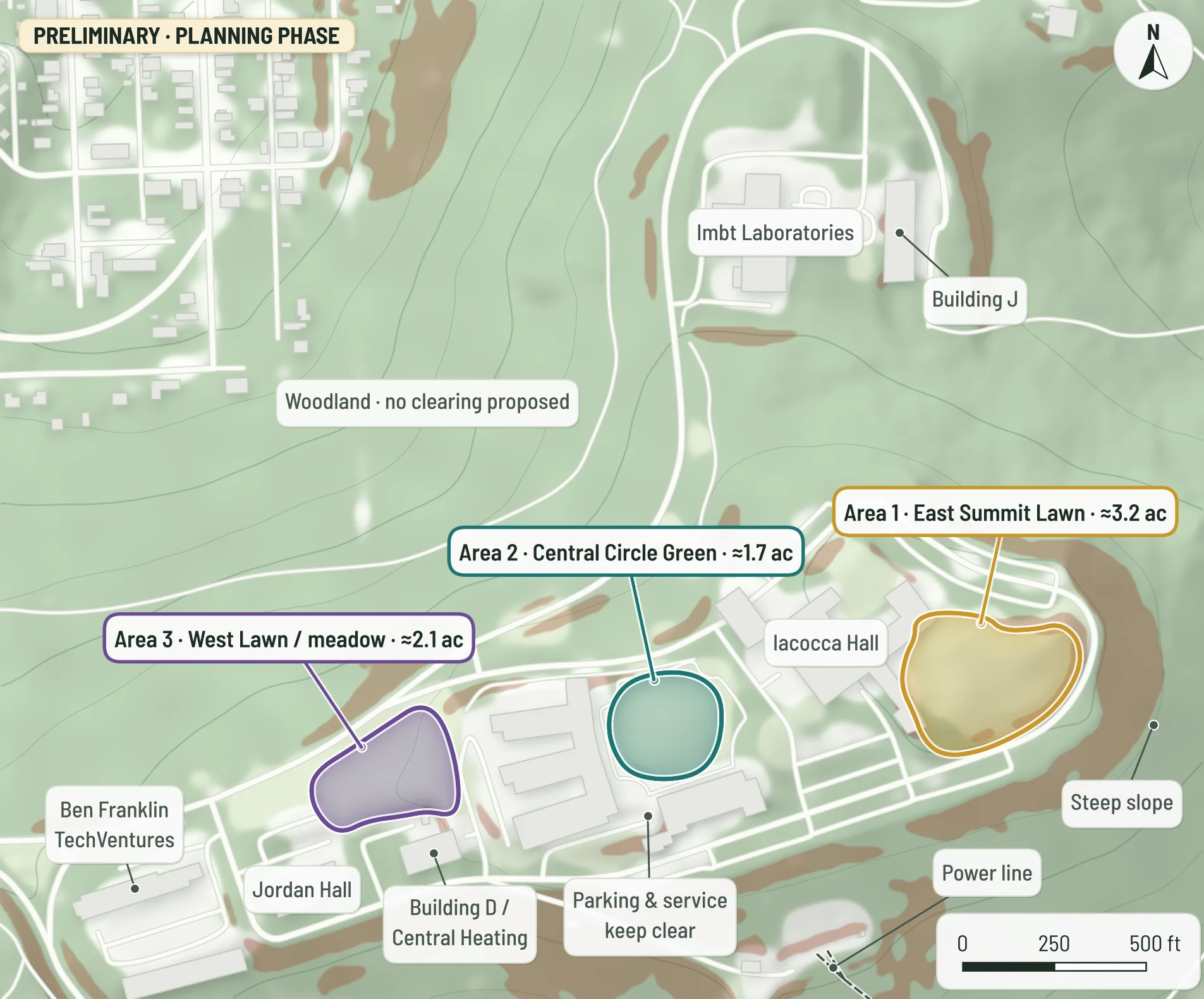
Map of the three possible study areas
Preliminary and unverified. Outlines are not surveys or parcels.
Opens the full-size image (1905 × 1581 pixels).
Credits: USGS, USDA NAIP, © OpenStreetMap contributors (ODbL), Microsoft, Overture Maps.
Where things stand
- The full plan is set out in a three-page PDF (revised 21 October 2026). Download the plan PDF (v3, 3 pages, 1.5 MB).
- The plan has been shared with university offices for feedback. We are waiting to hear back.
- Nothing is built, and there is no site permission, sponsor or funding. No work of any kind is happening on campus.
One simple philosophy
Make essential things simpler, more accessible, less wasteful, and affordable or free wherever practical.
Simpler
Fewer steps, easy to run and easy to maintain.
More accessible
Physically, with accessible routes and raised beds; financially; and with clear information.
Less wasteful
Careful with materials, water, energy, food and land.
Affordable or free where practical
Aim to be free to visit and use, subject to Lehigh’s access rules, with real costs and who pays stated openly once they are known.
Added after the plan PDF: a later idea for discussion, not a commitment. One long-term aim, not a promise: a future where money matters much less, and what counts is people and the work they do together.
Explore the plan
- Garden VisionWhat the garden is for, the philosophy behind it, and what it is not.
- Preliminary Site StudyThree possible study areas, the constraints we found, and what we still need to know.
- Pilot PlanAn illustrated pilot of about 0.74 acre with accessible paths, meadow, raised beds and an outdoor classroom.
- Long-Term PossibilitiesA larger garden, orchard and greenhouse, and the conditions they depend on.
- Food & CommunityA possible harvest-sharing program and a future idea for students to help choose crops.
- Biodiversity & SustainabilityNative meadow, water, compost, monitoring and four-season habitat.
- Volunteer VisionHow volunteers might take part if the garden goes ahead.
- Documents & SourcesDownload the plan PDF and see every data source and credit.
- FAQsStraight answers about status, land, food safety and more.
- ContactHow to get in touch about the plan.